A First Visit to a Makers’ Fair, Without the Rush
A first visit to a makers’ fair feels calmer with a simple plan: read the layout, mark stands to revisit and ask questions before choosing what to buy.
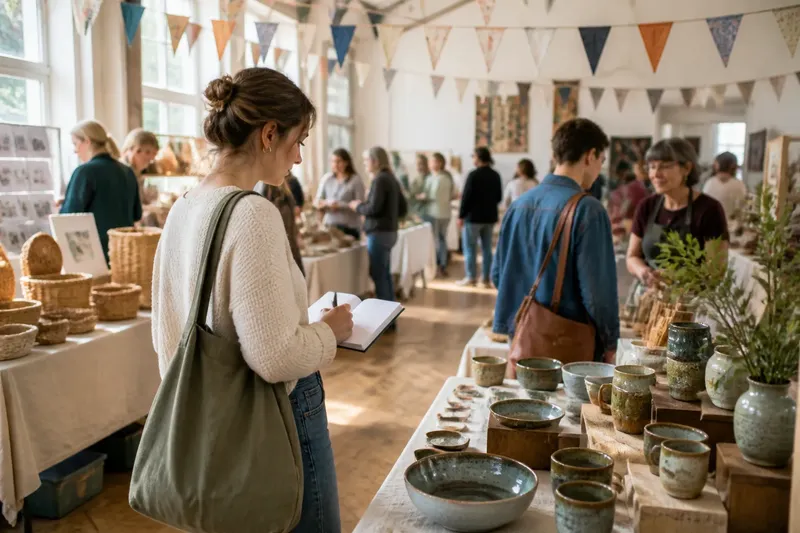
A first visit to a makers’ fair is easier when you give yourself permission to look before you buy. The tables may be crowded, the aisles narrow and the work unfamiliar; a first pass lets you notice the room, then return to a few makers with questions that matter to you.
That approach is not a route to cover as quickly as possible. It helps keep the fair legible: see how the space is arranged, spot the work you want to understand, and leave room for an unplanned conversation. Browsing, deciding and carrying purchases all at once can make a visit feel more demanding than it needs to be.
Why can the entrance feel overwhelming?
At the door, it is easy to treat every table as an urgent decision. A hand-thrown cup sits beside woven baskets; across the aisle, a printmaker is explaining a series to a visitor. With every display asking for attention, the room can seem busier than it is.
Often, the difficulty comes from trying to take in the whole fair from one spot. Step to the edge of the main aisle, if there is space, and look for the broad shape of the room: entrances, side aisles, quieter corners and any posted map. Avoid stopping in a doorway or in front of a busy stand; other visitors need that space too.
On your first pass, keep moving at a comfortable pace and make only light notes. A phone note such as “blue-glazed bowls, back wall” or a small mark on a printed map is enough. If a piece catches your eye, note the maker or the stand’s position rather than forcing yourself to decide immediately.
How can you remember which stand caught your eye?
After several tables, details can blur. The linen feels soft, the carved spoons have a pleasing curve, and the name on a card disappears from memory as soon as another display draws you in.
Relying on memory to hold both a location and a reason for returning can be difficult. Write down one identifying detail alongside the stand’s location: “Mara, stitched wall pieces, near the side entrance”, for instance. If names are difficult to recall, a distinctive material or colour can do the job.
Say you arrive at a fair in a village hall and notice hand-built stoneware mugs near the stage. You note “green rims, stage corner” and continue through the room. On the return pass, the note helps you find the stand again, so you can look closely without retracing the whole fair.
What makes a second pass useful?
A second pass works best when it is selective. Return to a few stands whose work stayed with you, rather than treating every first impression as a promise to go back. A maker may be occupied when you pass; if so, let them finish helping another visitor and circle back later.
Choose questions that help you understand the object in front of you. For a woven basket, you might ask what fibres are used and how the shape is intended to be used. For a print, ask what distinguishes the available versions. For jewellery, ask how it fastens or what materials touch the skin.
Questions need not sound formal. “What made you choose this glaze?” or “How did you settle on this form?” can invite a conversation about decisions in the work. If the stand is busy, begin with a short question and be ready to wait or return.
What can you ask a maker before deciding?
Can I handle this piece?
Ask before picking anything up, particularly if it is fragile, sharp-edged or arranged in a tightly packed display. The maker can show you how to hold it and point out details that are easy to miss.
What materials are used?
This can clarify what you are looking at and whether the material suits your intended use. If care or suitability matters, check the maker’s information and any relevant label rather than relying on an assumption.
How should I care for it?
For a textile, print, wooden utensil or glazed vessel, ask about ordinary cleaning and storage. A direct answer can help you judge whether the piece fits the way you live, not simply whether it appeals on the table.
Is this the only version available?
There may be variations in colour, size or finish, or the displayed piece may be one of a small group. Ask what options are present at the fair and whether any difference changes how the object is used.
How can you keep a purchase from making the visit awkward?
A bag can become cumbersome before you have seen the rest of the room. A fragile purchase may need careful handling, while a larger object can make narrow aisles harder to manage. The problem is often not the purchase itself but buying before you have worked out how you want to carry it.
If you are still browsing, ask the maker whether they can hold a chosen item while you continue, if that suits their arrangements. Some fairs provide a collection point or bag storage; others do not. Check what is available rather than assuming a service exists, and keep small purchases together in a secure bag if you are carrying them.
There is no need to buy something from every stand you enjoyed. A fair can be worthwhile for a conversation, a better understanding of a process or a note to follow the maker’s work later. Comparing every price or collecting every card is not worth the effort if it turns a pleasant visit into an assignment.
What if the maker is too busy to talk?
At a popular stand, the maker may be wrapping a sale, answering a question or demonstrating a technique. That is not a sign that your interest is unwelcome; it may simply be a moment when their attention is already committed.
Look at the display, read any cards, and come back when there is a pause. If you leave without speaking, a clear product note or business card can help you find the maker later. Keep the interaction brief if other visitors are waiting, and let the maker set the pace of the conversation.
How should you finish a visit without rushing?
Before leaving, pause somewhere that does not block the aisle and check your notes. You may want to return to one stand, make a final purchase or simply go. There is no need to complete the whole circuit again if you have already seen the work that interested you.
For a first visit to a makers’ fair, the useful distinction is between noticing and deciding. Let the first pass show you what is there; let the return pass give a handful of makers your attention. A brief note about a maker’s name, material or stand location can also help you find their work after the fair.