From Curiosity Cabinet to Public Collection
Curiosity cabinet to public collection: see how private objects became shared displays, and decide what kind of collection suits a county place today.
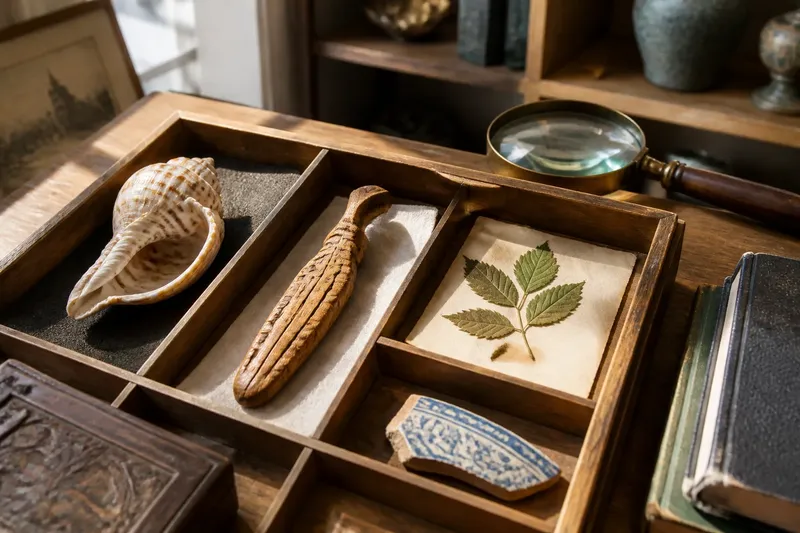
A curiosity cabinet could hold a shell from a nearby shore, a carved tool, a pressed leaf and a fragment whose origin was unclear. The move from curiosity cabinet to public collection changed more than the room or the audience: it changed what an object was asked to mean. For a county museum, local archive or community gallery, that history offers a useful question: should a collection preserve personal wonder, explain a place, or make room for many people to interpret both?
What changed when collecting became public?
Early cabinets were often arranged around the interests and resources of an individual collector. Objects might sit together because they were unusual, beautiful, foreign, natural or simply available. Their order could be personal rather than systematic, and the cabinet itself signalled the owner’s curiosity and access.
As collections became accessible to broader audiences, arrangement took on a public responsibility. A visitor needed some way to understand what they were seeing: a label, a sequence, a grouping by material or origin, or a person able to tell the story. Display began to shape knowledge rather than merely contain objects.
That shift did not erase private curiosity. It widened its audience and made the selection visible. What was included, named and placed beside something else could suggest a history of a landscape, trade, craft or community. What stayed out of view mattered too.
Which kind of collection suits your situation?
The right model depends on what the collection is for and who will encounter it. A shelf of locally made objects in a village hall has different responsibilities from a county archive, but both can make their choices clear and invite attention rather than treating objects as self-explanatory.
- If you are preserving a family or maker’s legacy: begin with a personal collection that retains the maker’s relationships and habits of keeping. Record who made or owned each item, where it came from, and any uncertainty; this preserves context without forcing every object into a single public narrative.
- If you want to interpret a particular place: choose a place-led collection. Group objects around a stream, market, quarry, town street or local practice, and explain the connection plainly. This fits a county museum or local history room because the setting gives visitors an accessible way into the material.
- If several communities need to recognise themselves: build a shared collection with contributions and interpretation from those communities. This fits a library, community centre or cultural venue whose audience is not represented by one collector’s viewpoint.
- If objects are gathered for close looking rather than a single story: use a study collection or open display organised by material, form or technique. A group of clay vessels, woven pieces or hand tools can reveal variation, provided the display explains why the comparison is useful.
- If you have a short-lived exhibition space: make a focused temporary collection rather than suggesting that a small selection stands for an entire region. A clear theme and stated limits help visitors understand what the display can—and cannot—claim.
Imagine a county library with a box of photographs donated by a retired sign painter. If the aim is to preserve that person’s working life, the library might keep the images in the sequence they were given, with notes about the painter’s methods and clients. If the aim is to explain changing shopfronts, it could select a smaller group and arrange it by street or lettering style, making the new purpose explicit. The observable difference is not just a tidier display: visitors can tell whether they are encountering one person’s working record or an interpretation of local streets.
How should objects be arranged for shared viewing?
Begin with the relationship that makes the objects worth seeing together. It might be a shared material, a local source, a maker’s process or a change in how an everyday object was used. A grouping should offer visitors a reason to compare, not simply fill a cabinet.
Then give the arrangement a readable path. A visitor might move from raw material to finished object, from a place to the people who worked there, or from an older tool to a later adaptation. The sequence need not be chronological; it should make its logic legible through concise labels and the objects’ placement.
Keep the object’s own details in view. A maker’s mark, a repair, a worn handle or a difference in glaze can carry more meaning than a broad claim about local identity. Labels can point to such evidence and distinguish what is known from what remains uncertain.
Not every object needs a long label, and not every display needs a dramatic narrative. A name, material, maker or source may be enough for one item, while a short introductory note explains why the group has been brought together. Clear distinctions between fact, attribution and interpretation build trust without making the display feel cautious or dull.
What does a public collection owe its visitors?
A public collection owes visitors a fair account of how its objects arrived and how the display has been shaped. A brief note can identify the collector or donor, explain the selection, and name any gaps that affect the story. This is especially useful when one perspective has historically been easier to preserve than others.
Access also means considering how people encounter the display. A cabinet placed high above eye level may protect delicate objects but make close looking difficult; a crowded label can exclude readers who need a simpler route through the information. Where conservation or access needs conflict, explain the choice and offer another way to engage, such as a clear image or a staff-led conversation.
For objects connected to living craft, community memory or sensitive histories, consultation should shape interpretation rather than arrive as a final endorsement. Ask contributors what they want named, what context is missing and whether an item should be shown at all. Where ownership, cultural permissions, conservation or local rules affect a decision, consult the relevant custodian or qualified professional.
What is not worth the effort is decorating a display with elaborate language that leaves visitors unsure what they are looking at. A simple, accurate label and a thoughtful arrangement can do more than a grand claim about the collection’s importance.
Which questions help you choose a collection model?
Should a collection tell one story or several?
One story can help a small display feel coherent, but it should not pretend to be the only account of a place. If different makers or communities understand the objects differently, show those perspectives side by side or explain why one account is being foregrounded.
Does every object need to be on display?
No. A public collection may include material kept for reference, conservation or future interpretation, while a display presents a selected portion. Tell visitors when they are seeing a selection, and provide a route to ask about related material where appropriate.
How much background should a label include?
Give enough to identify the object and explain its place in the display, then reserve longer context for a panel, catalogue or conversation. Specific details—such as a maker’s name or a known local use—are often more useful than general claims about tradition.
Can a personal collection become a public one?
It can, but public access does not automatically make a private arrangement suitable for display. Clarify the collection’s purpose, document what is known about the objects, and decide with the relevant people whether the original order should be preserved, interpreted or adapted.
How can the collection stay open to new meanings?
A public collection need not settle every question. A visitor may notice a connection between a basket’s weave and a local plant, or recognise a maker’s mark absent from the label. Provide a modest way to share such knowledge—through a comment card, a guided conversation or a contact point—and decide how new information will be reviewed before it changes the record.
That openness is not the same as treating every interpretation as equally established. Keep a distinction between documented provenance, a contributor’s memory and a visitor’s suggestion. When the distinction is visible, uncertainty becomes part of the collection’s account rather than a flaw hidden behind a polished display.
The path from curiosity cabinet to public collection is therefore not simply a change from private ownership to public access. It is a change in responsibility: to make choices visible, give objects intelligible company and leave room for people to see more than the collector first noticed. For anyone shaping a county collection, the most useful starting point is to name the intended relationship between object, place and visitor—and arrange the display so that relationship can be seen.